Ruapehu College Whānau Shine in 21st Annual Kapa Haka Competition
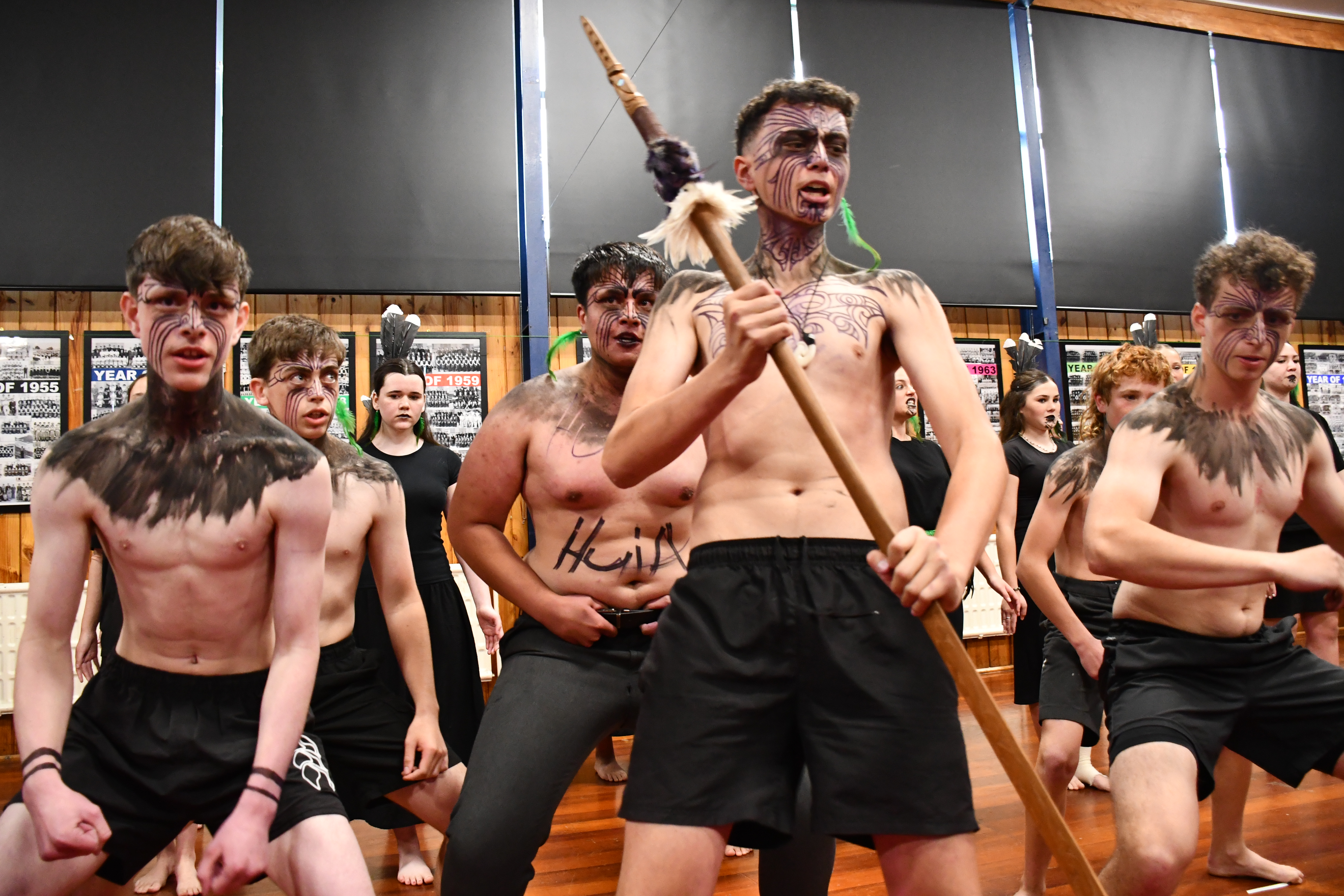
The hall at Ruapehu College was packed to the rafters on Friday as students, staff, whānau and members of the wider community came together for one of the most anticipated events on the school calendar — the 21st annual Inter-Whānau Kapa Haka Competition.
More than just a performance showcase, this event has become a cornerstone of the school’s cultural calendar, a celebration of identity, unity, and growth that echoes far beyond the walls of the college. Each of the school’s four whānau — representing different houses within the kura — has been dedicating time during a special “sixth period” in recent weeks to practice, refine and prepare their bracket, under the guidance of kaiako and student leaders.
This year like every year prior, providing rich, real opportunities for leadership and confidence building. Through kapa haka, students not only express their culture, but they also stretch themselves beyond their comfort zones — embodying the very values that Ruapehu College stands for: Respect (R), Honesty (O), Confidence (C), and Rapuhia kote Mātauranga (K) — Seek Knowledge.
Whether it’s stepping up to lead a haka, supporting others in harmony, or helping teach actions to their peers, there’s something in kapa haka for everyone. It’s a unique learning space where growth happens naturally — through passion, through whanaungatanga, and through purpose.
For students with strong cultural knowledge, the sixth period has provided a platform to tautoko (support) others, helping develop tuakana-teina relationships and valuable teaching skills. For others, it’s been a place of transformation — from quietly watching in the back to standing tall and proud, their voices strong, eyes fierce.
The inter-whānau competition is a powerful example of a growth mindset in action — students embracing challenge, persisting through practice, learning from feedback, and finding pride in progress. The performing arts setting allows students to develop not just cultural capability but also resilience, creativity, and the kind of confidence that carries into other areas of life.
And the impact doesn’t end with school. The waiata and haka learned at Ruapehu College are often performed again at many occasions including; weddings, tangihanga, and 21st birthdays — connecting students to their communities and reinforcing identity and belonging.
This year’s event was supported by a stunning final performance from Te Kura Kaupapa Māori o Ngāti Rangi, whose bracket captivated the audience and added another layer to the occasion. The competition was judged by an esteemed panel: Elijah Pue, Mareikura Kaire, Korty Wilson, and Chaana Morgan, whose insights and experience were invaluable in recognising the excellence on display. Thank you for your time and matauranga. A special thank you also goes to our charismatic MC, Dave Sims, who kept the event flowing and spirits high throughout the day.
After a fierce and passionate contest, the final results were announced to thunderous applause: 🥇 1st Place – Tui 🥈 2nd Place – Kiwi 🥉 3rd Place – Huia 🏅 4th Place – Weka
The coveted trophy, dedicated to the memory of Matiu Mareikura and Joan Akapita, remains a symbol of pride and honour fiercely contested by all whānau.
Why Learning Culture Matters Studies show that students who engage with their cultural heritage often enjoy improved self-esteem, stronger academic engagement, and better overall well-being. At Ruapehu College, we celebrate the richness of all cultures within our community, and we believe that when students are supported to explore and express their identity, they grow not just as learners, but as people.
In Aotearoa New Zealand, embracing Māori culture is particularly important. It connects us to the stories of this land, fosters empathy and understanding, and strengthens our shared responsibility to uphold Te Tiriti o Waitangi. Embracing Māori culture benefits everyone — it grows unity, builds bridges between diverse backgrounds, and nurtures confident, culturally aware citizens who can walk in many worlds.
One of the most powerful ways our students engage with Māori culture is through kapa haka. More than performance, kapa haka teaches connection — to values like manaakitanga, kotahitanga, and whanaungatanga — and to each other. For Māori students, it can be a reaffirmation of their heritage and identity. For non-Māori students, it is an invitation into deeper understanding and respect for the culture of this land.
As Principal Marama Allen shared during her address, “In 2014, Waikato University, Te Matatini and the Ministry for Culture and Heritage conducted research on the value of kapa haka. Kapa haka is more than just performance — and despite its significance and uniqueness to our country and culture, its value is not well understood or documented. Kapa haka is a special part of our identity, not only as Māori, but for all of us as New Zealanders. It can help us make meaningful connections with other cultures, like discipline, collaboration, public speaking, and self-belief.
Research supports this impact. According to the Ngā Hua a Tāne Rore report (2014), students involved in kapa haka show increased confidence, stronger peer relationships, and greater leadership potential. Participation in cultural performance groups has also been linked to improved wellbeing, emotional resilience, and a stronger sense of belonging.
When schools provide authentic opportunities for cultural learning — like our inter-whānau kapa haka competition — they’re not just teaching performance. They’re creating space for identity to flourish, for confidence to grow, and for communities to come together with pride and purpose. As the final haka echoed through the packed hall on Friday, the energy in the room spoke for itself — a celebration not only of performance, but of unity, growth, and the lasting impact of carrying culture forward. At Ruapehu College, kapa haka is about building confidence, developing leadership, and strengthening our skills in haka pōwhiri, so we can welcome others with mana and demonstrate manaakitanga the right way. It’s also about providing students with real-world, transferable skills.